




Why Your Skin Needs More Support in Winter
01 June 2026
A Simple Guide to Repairing Your Skin Barrier
By Georgie, Founder of The Natural Skincare Co.
Table of Contents
• What the skin barrier actually is
• Why winter makes it harder
• How menopause changes everything
• The signs your barrier is struggling
• A complete routine: the products I use and trust
• My simple winter skin routine
• Frequently asked questions
What the Skin Barrier Actually Is
I used to hear the words 'skin barrier' and glaze over a little. It sounded clinical. Like something a dermatologist would say to sell you something.
But once I understood what it actually meant, everything changed.
Your skin barrier is the outermost layer of your skin. Think of it like a protective wall made up of skin cells and lipids. Around thirty percent of that structure is made up of a natural wax ester that kills germs and bacteria while locking in moisture and protection. When it is working well, it keeps hydration in and environmental stressors out. When it is damaged, skin becomes dry, reactive, tight and sensitive.
We start to lose that natural wax ester over time. And the result shows up exactly how you would expect. Dull. Tired. Dry. A skin that no longer holds itself together the way it used to.
It is, in a very real sense, the foundation of everything.
Why Winter Makes It Harder
Cold air holds less moisture. Central heating strips what little humidity remains indoors. Wind pulls at the surface of the skin. And all of this happens before we even factor in what is going on hormonally.
The result is a skin barrier that is working twice as hard and receiving far less support.
For women in their forties and beyond, winter is not just an inconvenience. It is the season when skin shows its vulnerabilities most clearly.
You might notice tightness after cleansing. A dull, flat appearance. Sensitivity to products that never used to cause issues. Dry patches that do not respond to your usual moisturiser.
These are not random. They are signals.
How Menopause Changes Everything
Here is what I wish someone had told me earlier.
As oestrogen levels decline during perimenopause and menopause, the skin produces less collagen, less hyaluronic acid and fewer natural oils. The skin barrier becomes thinner and less resilient. Its ability to hold moisture and repair itself slows significantly.
This means that winter, for menopausal skin, is not just dry. It can feel genuinely fragile.
It is not a failing. It is a shift. And once you understand the shift, you can respond to it properly.
The Signs Your Barrier Is Struggling
It helps to know what you are looking for. These are the most common signs that your skin barrier needs attention:
• Persistent dryness that does not improve with moisturiser
• Tightness or a feeling of stretched skin
• Redness or flushing that was not there before
• Sudden sensitivity to products you have used for years
• A rough or uneven texture
• Skin that looks dull or lacklustre regardless of what you apply
If several of these sound familiar, your skin barrier is asking for help. The good news is that it can be restored with the right approach.
A Complete Routine: The Products I Use and Trust
I want to keep this practical. Because I know how easy it is to read a list of advice and feel more overwhelmed than you did before.
Everything I am about to share is from the Jane Scrivner range. I use these products myself. They have earned their place in my routine because they work, and because the philosophy behind them aligns entirely with how I think about skin at this stage of life. Not correcting. Supporting.
Step 1: Cleanse Without Stripping
Over-cleansing, or using the wrong cleanser, undoes everything else before it even has a chance to work.
The Jane Scrivner Luxury Cleansing Balm is what I reach for every evening. It is formulated with jojoba oil, which is a golden liquid wax that genuinely mimics the skin's own natural wax production. Rather than stripping the barrier, it penetrates into the skin's layers to replenish and restore. Rich in vitamins A, B, D and E, essential fatty acids, and powerful antioxidants, it removes the day thoroughly while balancing sebum and maintaining barrier function.
No squeaky feeling. No tightness. Just skin that feels clean and cared for.
Step 2: Hydrate Deeply
A barrier that lacks moisture cannot function properly.
The Jane Scrivner Bioluronic Buzz is something I rely on all year, but especially in winter. It is a bio-fermented hyaluronic acid serum that supports deep hydration and strengthens the skin barrier from within. I apply it morning and night on slightly damp skin before anything else.
For a beautiful mid-routine refresh, the Jane Scrivner Skin Drink Hydrating Mist is something I have genuinely come to love. Made with organic high altitude lavender hydrosol, organic French rose hydrosol and frankincense essential oil, it is far more than a toner. I spritz it after cleansing and before my oil to add a layer of hydration and tone. In winter I also keep it by the bed for those moments when night heats strike. It is immediately calming and cooling.
Step 3: Nourish and Restore with Oil
Lipids are the fats that hold your skin barrier together. Cold weather depletes them. The answer is to replenish them through carefully formulated oils that work with the skin, not just on top of it.
The Jane Scrivner Skin Elixir Balance Nourish Facial Oil is my daily foundational oil. It combines organic jojoba oil with nine skin-loving essential oils to form what the brand calls a protective lipid-water barrier sandwich. It is pro-collagen, pro-elastin, suitable for all skin types, and despite being an oil it feels genuinely weightless. It penetrates to the skin matrix, carries nutrients into the deeper layers and helps complete the gaps between skin cells that allow moisture to escape.
For menopausal skin specifically, the Jane Scrivner AFFIRMATIVE Firm Tone Facial Oil is something I would particularly highlight. It is rich in vitamin A, natural fruit peptides and sea buckthorn, and it supports the skin's natural barrier and matrix for healthy, balanced skin. Replenished and firmer looking. I layer it over the Skin Elixir in the evening when my skin needs that extra level of support.
Step 4: Support the Eye Area
The skin around the eyes is thinner and more delicate than anywhere else on the face. It is also the first place to show the signs of fatigue, dehydration and hormonal ageing. The fat loss, the loss of elasticity, the shadows. None of it is imagined.
The Jane Scrivner Expert Eye Duo Ultra Hydrating Eye Masque is made with gentle organic oats, cooling organic aloe vera and vitamin E to nourish, protect and address trans-epidermal water loss. The results are a plumped, cooled and moisturised eye area. I use it as a treatment a few times a week in winter, when everything around the eyes can feel particularly tired.
My Simple Winter Skin Routine
I am a believer in consistency over complexity. Here is what I actually do.
Morning
• Skin Drink Hydrating Mist to layer hydration and tone
• Bioluronic Buzz on slightly damp skin
• Skin Elixir Balance Nourish Facial Oil to seal everything in
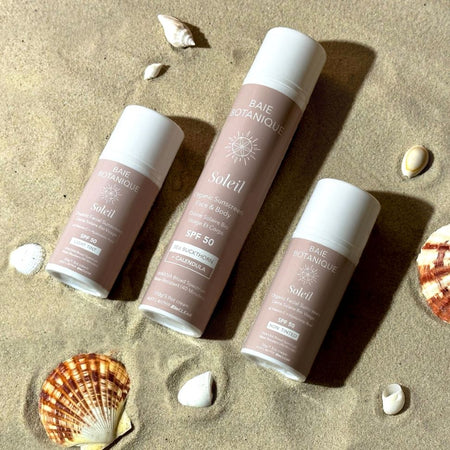
• Baie Botanique Soleil Facial Sunscreen
Evening
• Luxury Cleansing Balm to remove the day gently
• Skin Drink Hydrating Mist to layer hydration and tone
• Bioluronic Buzz on slightly damp skin
• AFFIRMATIVE Firm Tone Facial Oil on top if skin needs extra support
• Expert Eye Duo Eye Masque a few times a week
That is it. Simple. Consistent. And my skin is genuinely more comfortable for it.
Frequently Asked Questions
1. Can I repair my skin barrier quickly?
Yes. With the right products and a consistent routine, most people notice improvement within one to two weeks. The key is stopping anything that is further depleting the barrier while you repair.
2. Does SPF matter in winter?
Absolutely. UVA rays penetrate cloud cover and glass. Sun protection is a year-round essential, not just for summer.
3. Can diet affect my skin barrier in winter?
Yes. Omega-3 fatty acids, found in oily fish, flaxseeds and walnuts, support the lipid layer from the inside. Staying well hydrated matters enormously too.
4. Is it normal for my skin to behave differently in winter than in summer?
Very much so. Seasonal changes genuinely affect how the skin functions. Your routine should adapt with the seasons, not stay fixed.
5. I have always had oily skin. Do I still need richer products in winter?
Yes. Even oily skin can have a compromised barrier. The oil your skin produces is not the same as the lipids that make up the barrier itself. The Skin Elixir Balance Nourish Oil is especially well suited to oily and combination skin types.
6. How do I know which products are right for my skin right now?
I am always happy to help. Send me a message through the store or DM me and I will do my best to point you in the right direction.
You can shop the full winter skin barrier range at thenaturalskincareco.com.au
This is your reminder to slow down, nourish yourself and take up space.
Georgie x
Founder, The Natural Skincare Co.
0 comments